













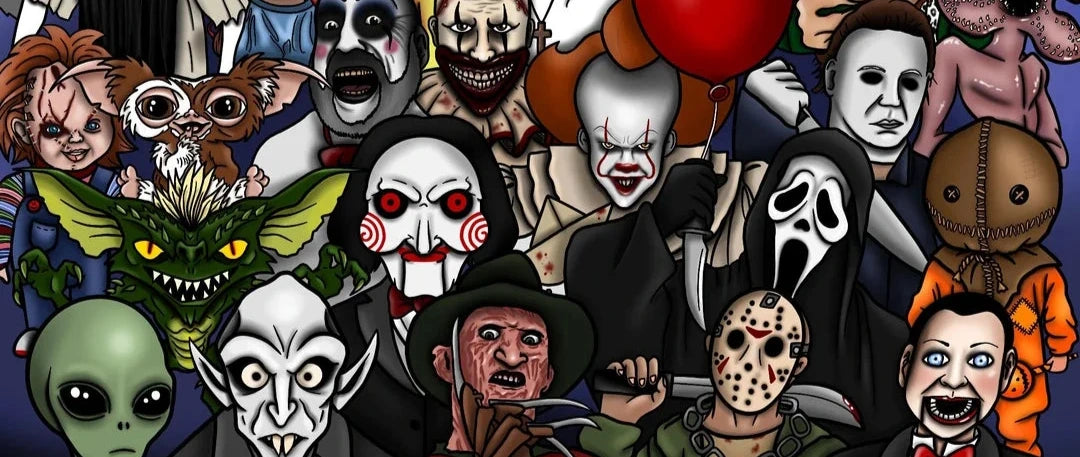
For over a century, horror cinema has shaped our nightmares with characters that have become legendary.
From the vampire Nosferatu to the sadistic traps of Saw, each era has produced its own “villain,” reflecting its collective fears. Some are monstrous creatures from elsewhere, others ordinary humans, but they all share one power: leaving a lasting mark on our minds!
Discover the collection here

Horror cinema has always drawn its power from inhuman creatures that send chills down your spine. From classic vampires to aliens, and from monsters to mutant ghouls, these figures embody our deepest nightmares.
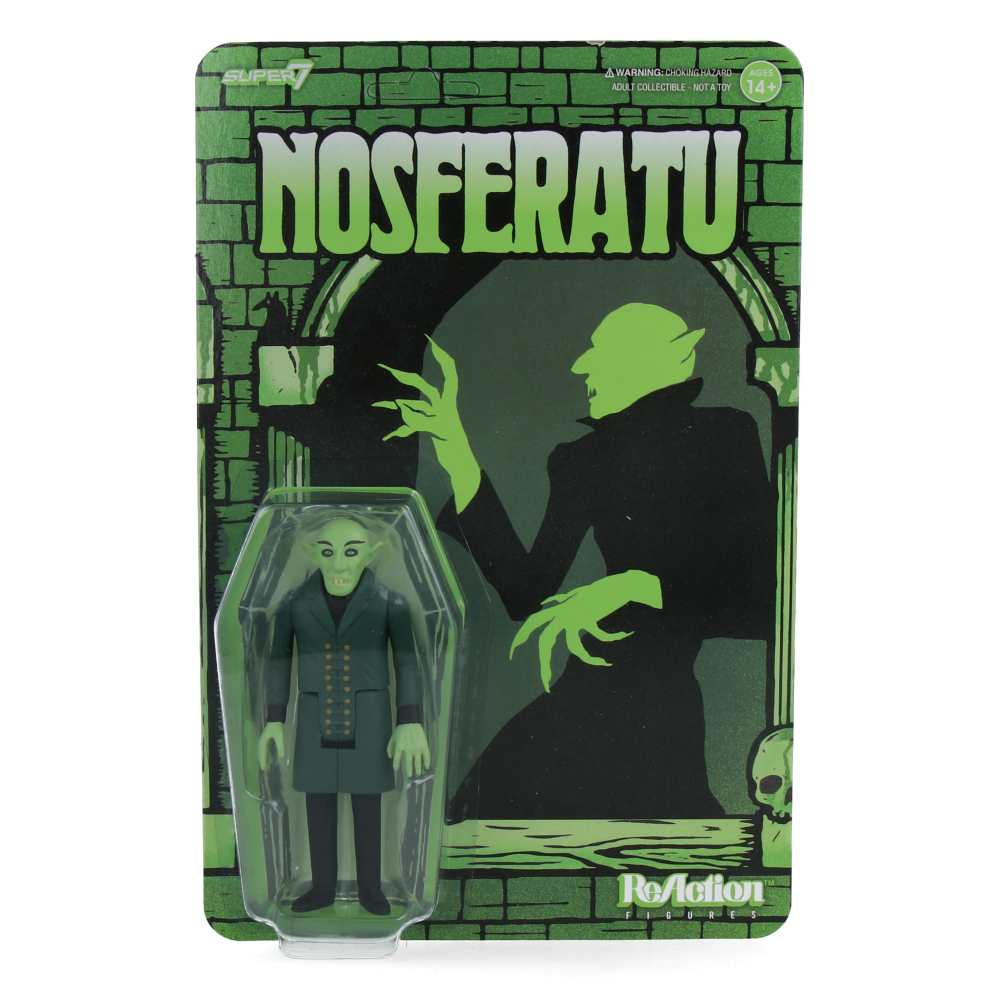
Nosferatu
First, one thinks of Nosferatu, the 1922 vampire whose skeletal appearance and piercing eyes laid the foundations of Gothic horror.
Find the ReAction Figure here
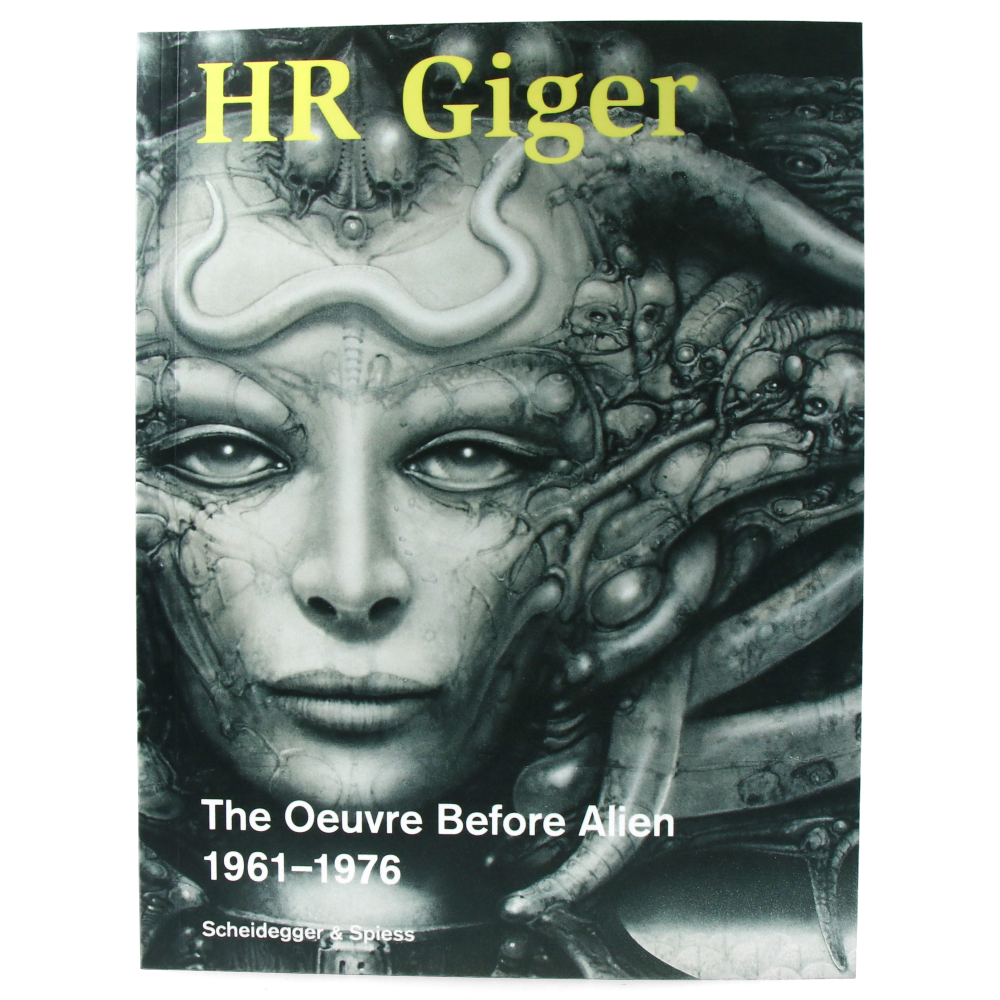
Alien
Later, the imagination of H.R. Giger gave birth to the Alien, the biomechanical Xenomorph that embodies the ultimate fear of the unknown.
Find the book by H.R. Giger here

The Gremlins
Creatures like the Gremlins bring a mix of horror and humor, their small mischievous forms spreading chaos with flair.
Find the ReAction Figure here
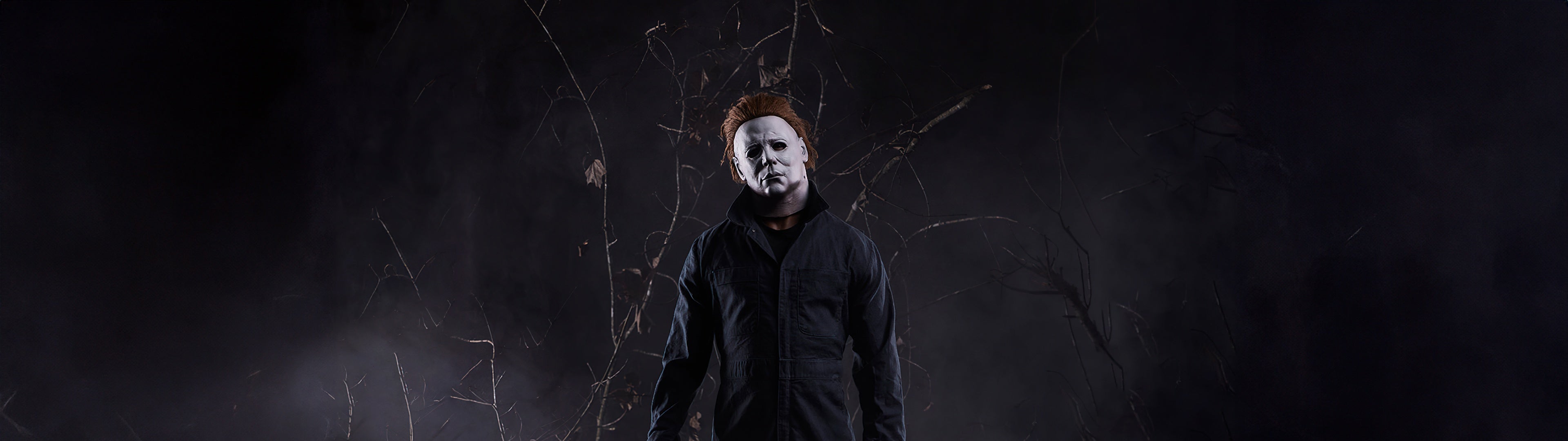
Among the most iconic figures in horror cinema, masked killers hold a special place. Their anonymity and silence make them even more terrifying: behind a simple mask hides a murderous impulse that seems impossible to stop.
From Leatherface in The Texas Chainsaw Massacre to Ghostface in Scream, and from Michael Myers in Halloween to Jason Voorhees in Friday the 13th, these relentless figures gave rise to the slasher genre.
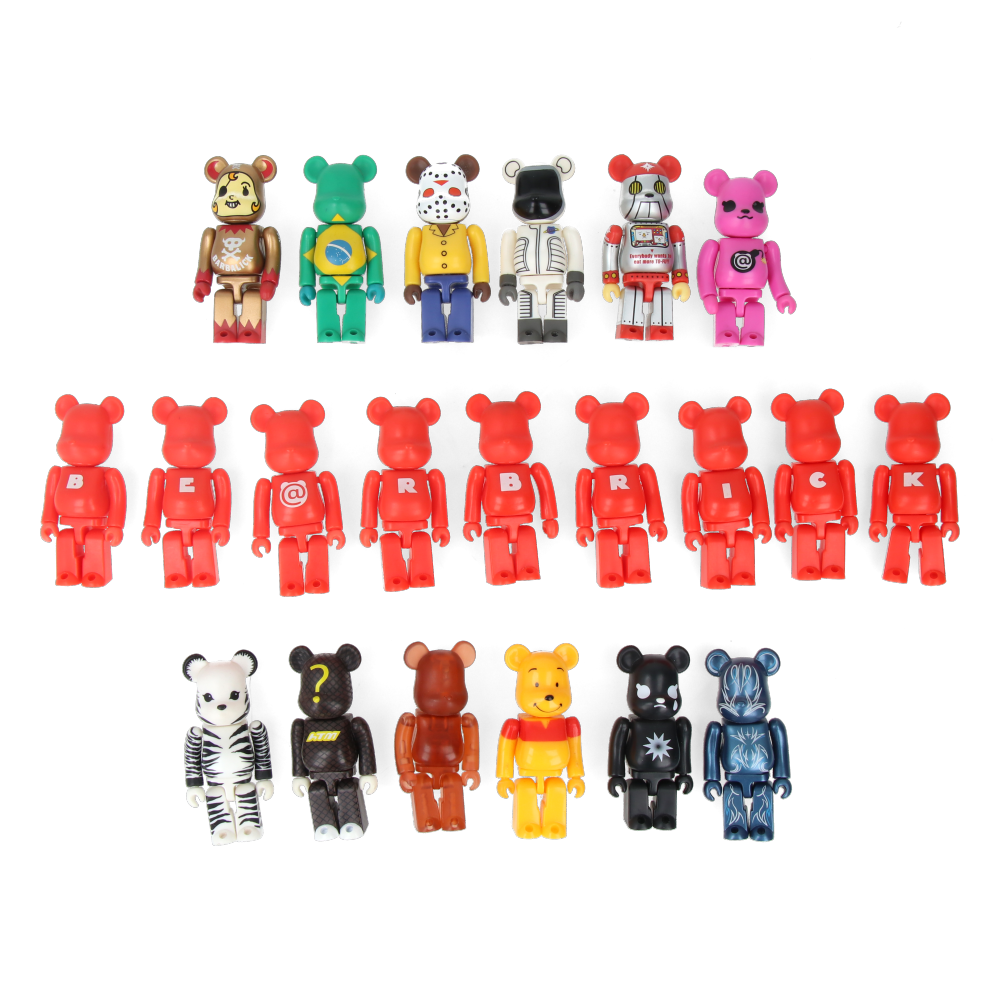
Friday the 13th
Jason Voorhees
Armed with his machete and hidden behind his famous hockey mask, he embodies terror at the heart of Crystal Lake camp.
The Friday the 13th saga made history in horror cinema by introducing a cold, methodical, and unreasoning killer.
For fans, this icon has naturally found its place in the world of collectibles: the Bearbrick Series 3, available on our site, features a Bearbrick modeled after Jason Voorhees.
Discover the series here
Halloween
Michael Myers
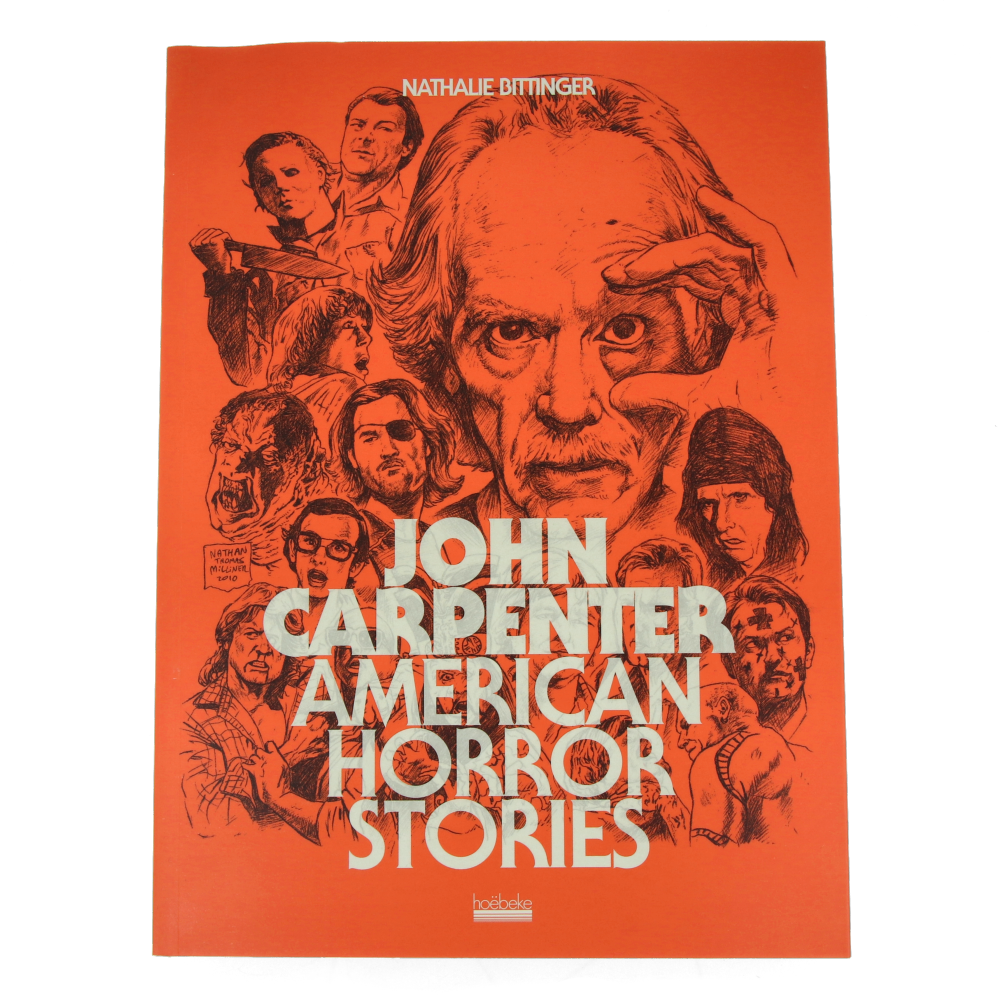
It’s hard to talk about masked killers without mentioning Michael Myers, born under the camera of John Carpenter with Halloween in 1978.
White mask and kitchen knife: Michael Myers is the archetype of the slasher, a killer without emotion or explanation, whose mere presence is enough to create unbearable tension.
The film’s success gave rise to a cult saga that continues to this day, with multiple sequels and reinterpretations.
On our site, you can find a book dedicated to John Carpenter, a true master of horror, whose influence on the genre remains unmatched.
Find the book here
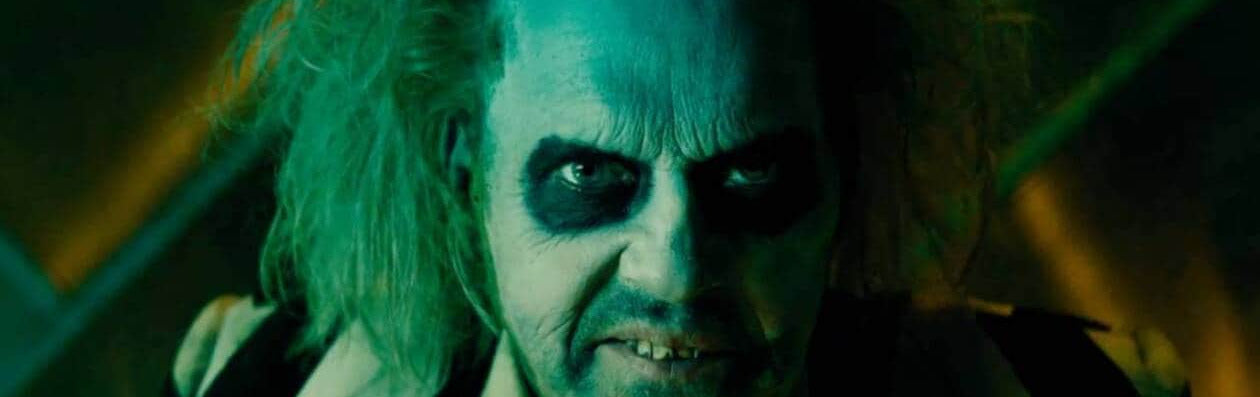
Horror is not limited to blades and claws: sometimes, it’s the invisible forces that send the greatest chills.
Spirits and supernatural monsters exploit our deepest fears, those of the unknown and the afterlife. Whether it’s the terrifying ghosts of Poltergeist, the demon possessing Regan in The Exorcist, the chilling apparitions in The Ring , or the cursed doll Annabelle from The Conjuring, these entities have left a lasting mark on horror culture.
Even in a more whimsical vein, with the trickster Beetlejuice or Oogie Boogie from The Nightmare Before Christmas, spirits continue to fascinate and fuel the Gothic imagination.
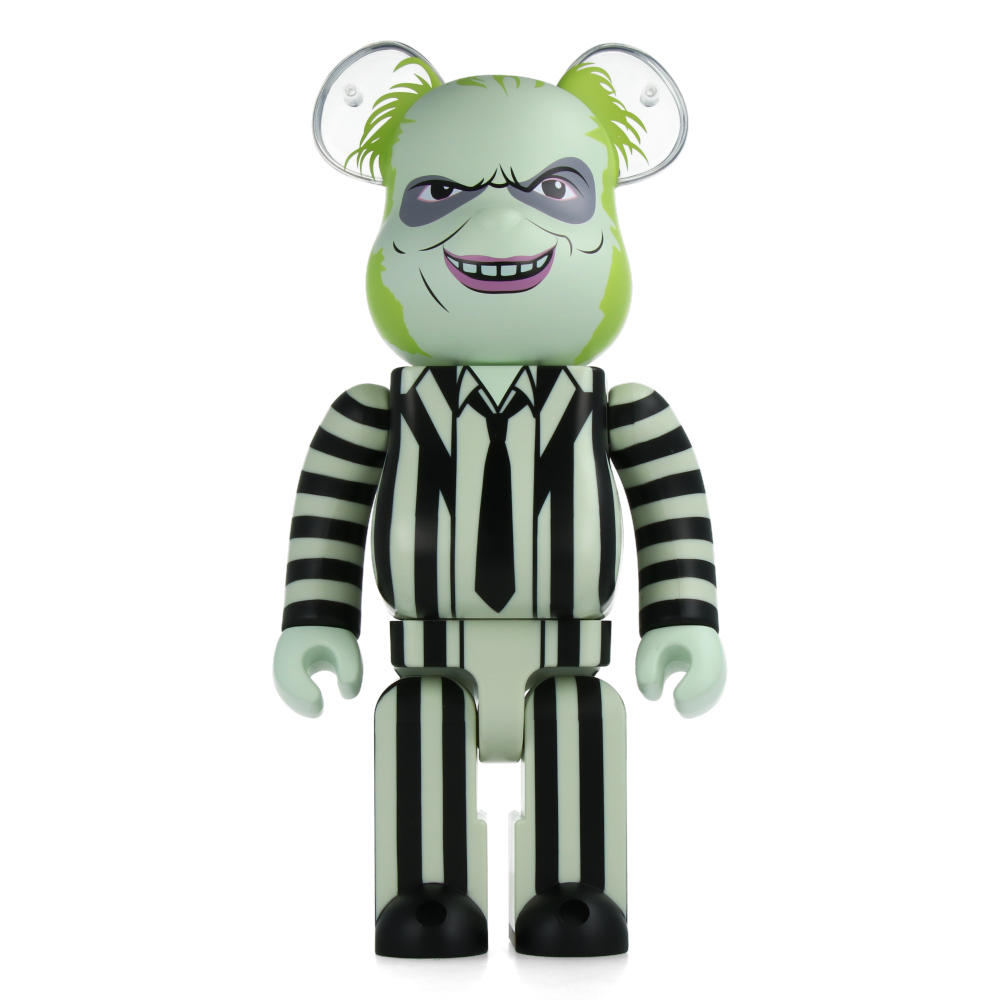
Beetlejuice
It’s hard to talk about cult spirits without mentioning Beetlejuice, the eccentric and manipulative specter who haunts the living in Tim Burton’s film. Both comical and unsettling, he perfectly embodies the blend of dark humor and Gothic aesthetics that has almost become the director’s trademark.
His black-and-white striped figure and wild appearance have made him a pop culture cult character. Widely represented in the toy universe today, Beetlejuice is available as a Bearbrick on our site.
Find it here
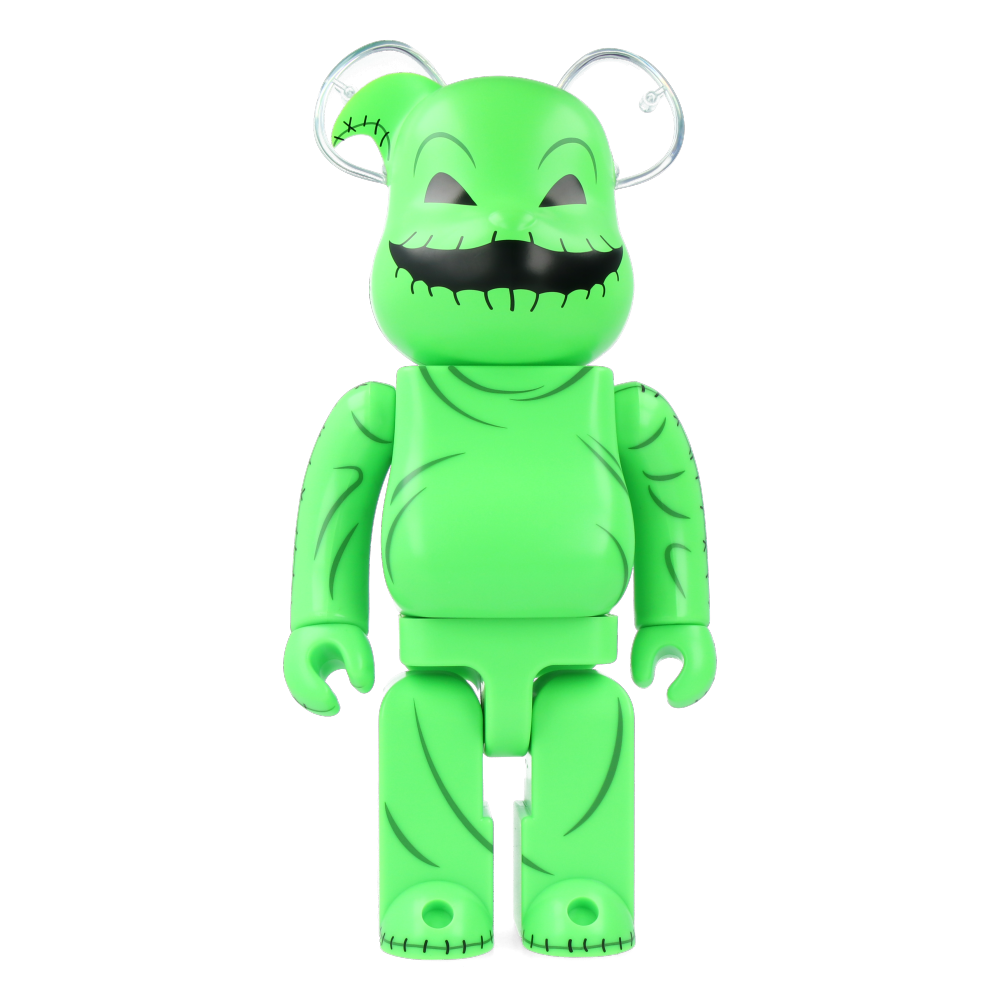
Oogie Boogie
In a darker and more musical vein, Oogie Boogie stands out as the main villain of The Nightmare Before Christmas (1993). Made of burlap teeming with insects, he embodies the lurking threat within Jack Skellington’s world. His presence adds a touch of horror to the universe imagined by Tim Burton and Henry Selick.
For those who loved the film, Oogie Boogie is available as a Bearbrick 400% on our site. It is also offered in a 100% version alongside Santa Jack !
Find it here
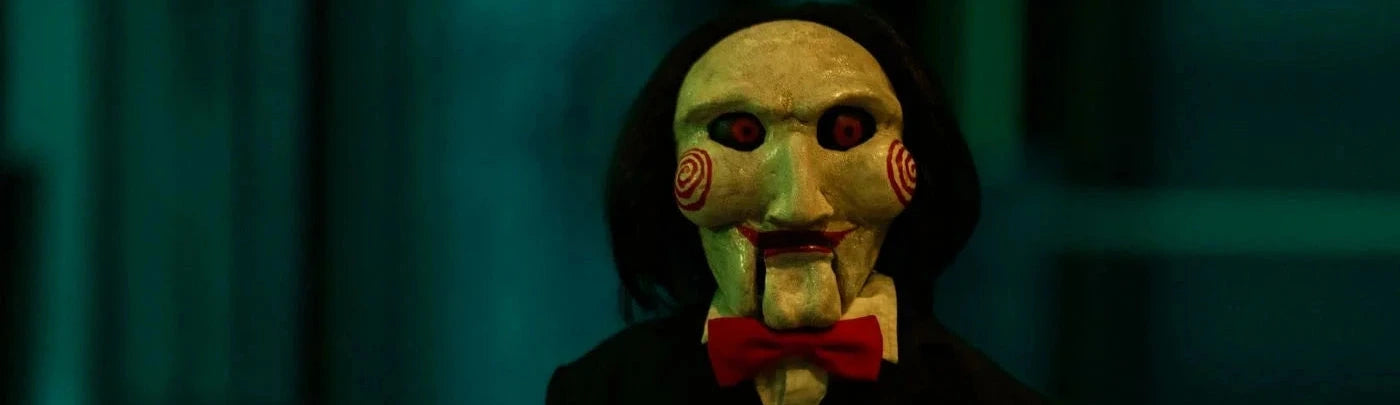
In horror, some monsters do more than just kill: they take pleasure in torturing, manipulating, and humiliating their victims, turning fear into a cruel game.
Think first of Jigsaw (Saw), the mastermind of traps where every challenge is a sadistic test, or Hannibal Lecter, master of psychological manipulation who toys with minds long before resorting to physical violence. There’s also Annie Wilkes (Misery), who holds and slowly breaks her victim like a toy, or the two young men from Funny Games, whose cold-blooded sadism is a form of entertainment. Other antagonists expand this cruel game: the torturers and anonymous clients in Hostel, the sadistic collector in The Collector and The Collection, or the monstrous surgeon from The Human Centipede.
These characters share one common trait: they turn suffering into a performance.
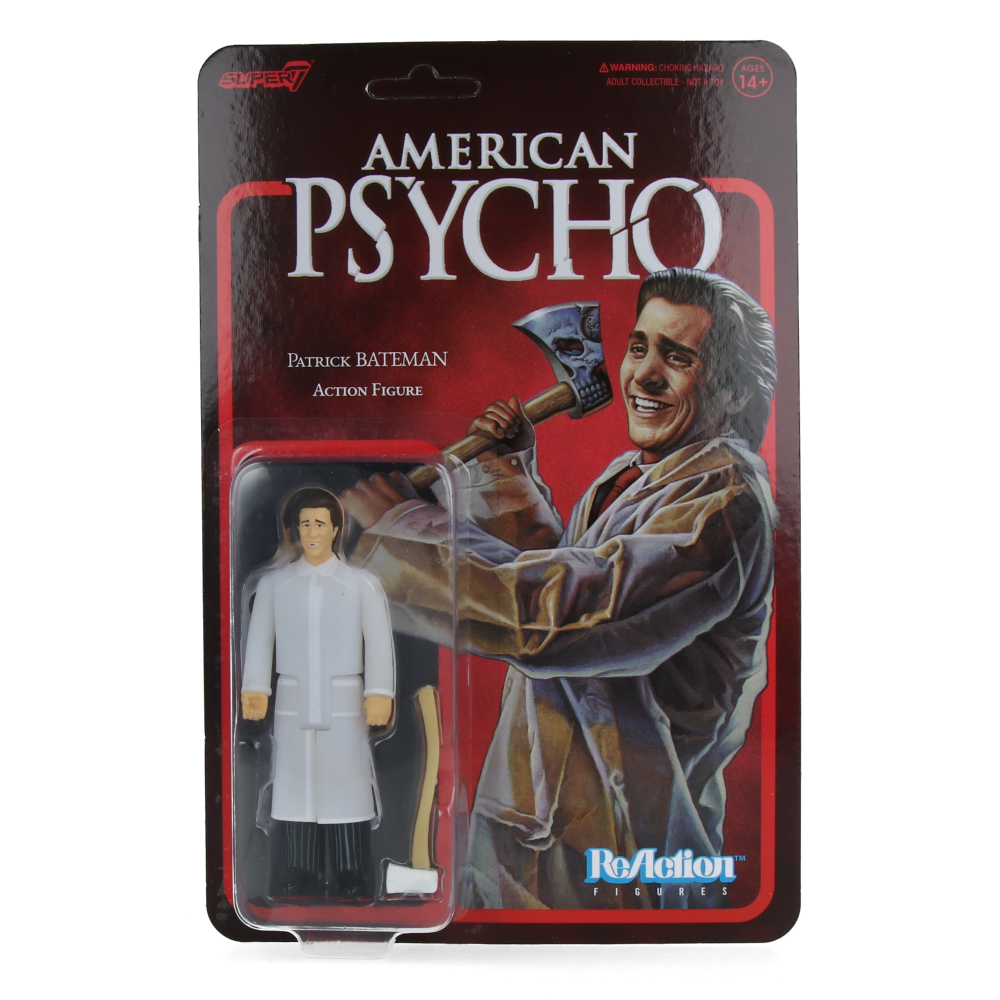
American Psycho
Patrick Bateman
With a flawless suit and a charming smile, Patrick Bateman is the perfect embodiment of the 1980s New York yuppie.
But behind this façade hides a psychopathic killer obsessed with appearance and social success. Adapted from the cult novel by Bret Easton Ellis, American Psycho (2000) made its mark on cinema with a chilling Christian Bale performance, blending social satire and brutal horror.
As a cult character, Bateman illustrates the idea that the monster can hide behind an attractive face.
The ReAction Figure of Patrick Bateman is available on our site, perfect for fans of cult horror cinema collectibles.
Find it here
Saw
John Kramer (Jigsaw)
In 2004, horror took on a new face with Jigsaw, the twisted mind behind the Saw saga.
Unlike masked killers, John Kramer does not kill directly: he “tests” his victims through sadistic traps where survival depends on their ability to endure pain. This cruel approach paved the way for the torture porn subgenre and made Jigsaw an essential figure in modern horror.
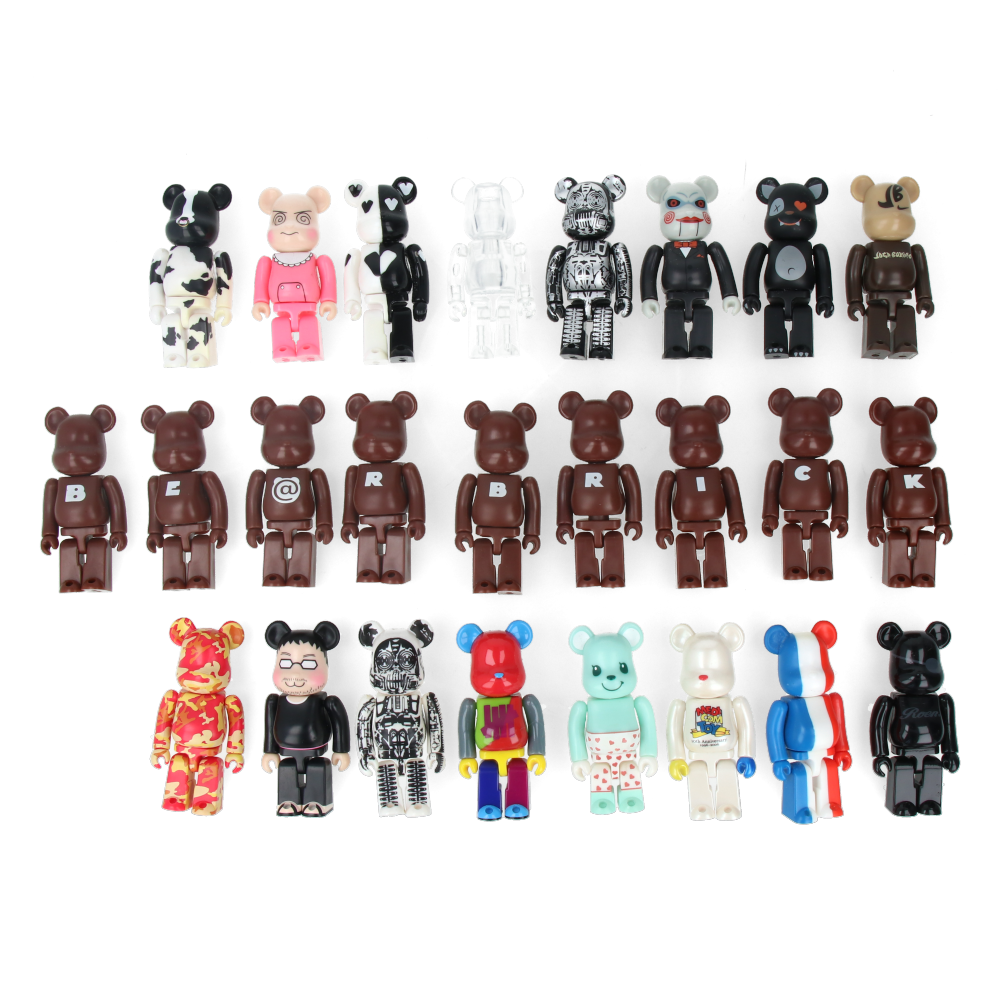
The Jigsaw doll figure in Bearbrick 100% is included in the Bearbrick Series 12, a must-have for any fan of the Saw universe.
Find it here
Hostel
Elite Hunting Club
With Hostel (2005), Eli Roth takes the concept of the monstrous human even further.
Here, there are no masks or supernatural elements: just wealthy men willing to pay to torture innocents. This hyper-realistic approach shocks as much as it fascinates, reflecting the idea that the most terrifying horror sometimes comes from reality itself.
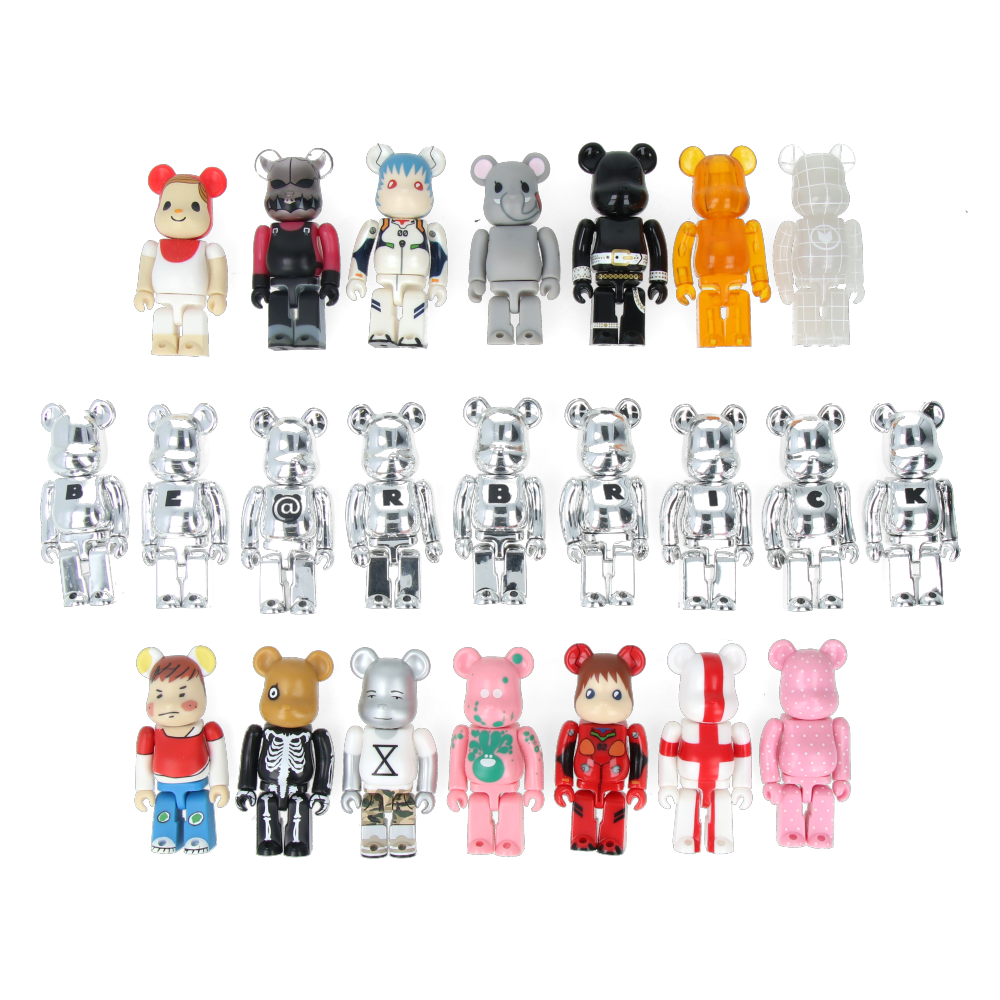
The Bearbrick Series 13 includes a character inspired by this horror film.
Find it here
American Psycho (2000) is marked as much by its icy atmosphere as by Christian Bale’s obsession with portraying Patrick Bateman.
To embody the character, he followed the morning routine described in the novel, studied Bret Easton Ellis’s text in minute detail, and even isolated himself from the rest of the crew, giving the character a martian, detached aura. The famous scene where Bateman does the moonwalk with his axe was entirely improvised by the actor, who had fought hard for the role against Ewan McGregor (Obi-Wan Kenobi).
Originally, Leonardo DiCaprio was supposed to play the role under Oliver Stone’s direction, but the project changed hands before reaching Mary Harron.
To prepare, Christian Bale also drew inspiration from Tom Cruise on David Letterman’s Late Show, whose intense gaze gave him the perfect energy for Bateman.
Furthermore, Tom Cruise appears in the novel and lives in the same apartment building as Patrick Bateman. The two even meet, and Patrick Bateman calls him “Bartender” in reference to his role in the film Cocktail.
Finally, the film’s open ending leaves doubt about the reality of the murders: fantasies or real acts? Harron and co-writer Guinevere Turner insisted that, even if some passages are surreal, Patrick Bateman did commit his crimes, perhaps not as spectacularly as in his imagination.
Before becoming a cult saga, Saw (2004) was just a ten-minute short film shot by James Wan and Leigh Whannell. The foundations of the universe were already present, including the terrifying reverse bear trap and the puppet on a tricycle. Whannell, who plays Adam in the film, found inspiration for Jigsaw’s mobile after an MRI due to migraines.
Filmed in only about twenty days with a tiny budget of $1.2 million, Saw earned over $55 million, becoming one of the most profitable films ever. Its success also relies on its final twists, jealously guarded: for Saw 2, production even filmed five different endings to prevent leaks.
Finally, the film’s visual universe pays tribute to Italian horror cinema, especially Dario Argento, whose black gloves and eerie doll from Suspiria are echoed.
With Hostel (2005), Eli Roth sign a horror movie which left its mark… and not only in the cinema. Originally, Roth got the idea for the scenario when he discovered a site offering to travel to Thailand to... kill someone, for a fee, a portion going to the victim's family (willing victim to be killed!). A sordid concept which laid the foundations of its history.
Enthusiastic about the project, Quentin Tarantino decided to produce it and put his name on the poster, which gave the film worldwide visibility.
Hostel had unexpected consequences: the Slovakia, where the plot takes place, has seen its tourist image tarnished to the point of inviting Roth, all expenses paid, to try to restore its image.
Find all our products related to horror here
